387 - Birds from the shore in Vierville

The birds visible in Vierville-sur-Mer are typical of a grove region, but its coastal position bordering on a ZICO (Zone of Community Interest for Birds) considerably increases the number of species that frequent it.
Indeed, the rocky coastline of Vierville-sur-Mer in Cricqueville-en-Bessin is home to a remarkable nesting avifaune at the rank of which, the tridactyl seagull occupies a place of choice. With more than 1500 couples, these cliffs are home to the largest French colony of this species (photo).
The petrel fulmar or fulmar boreal(photo), close to the albatross of the southern lands, finds there the anfractuosities necessary for its nesting. The majority of the French population is Norman and the Bessin coast is home to more than 20% of the national workforce. Curious and easy to observe the fulmar will touch you if you frequent the top of the cliff

Tridactyle seagulls

Fulmar or boreal fulmar

Great cormorant
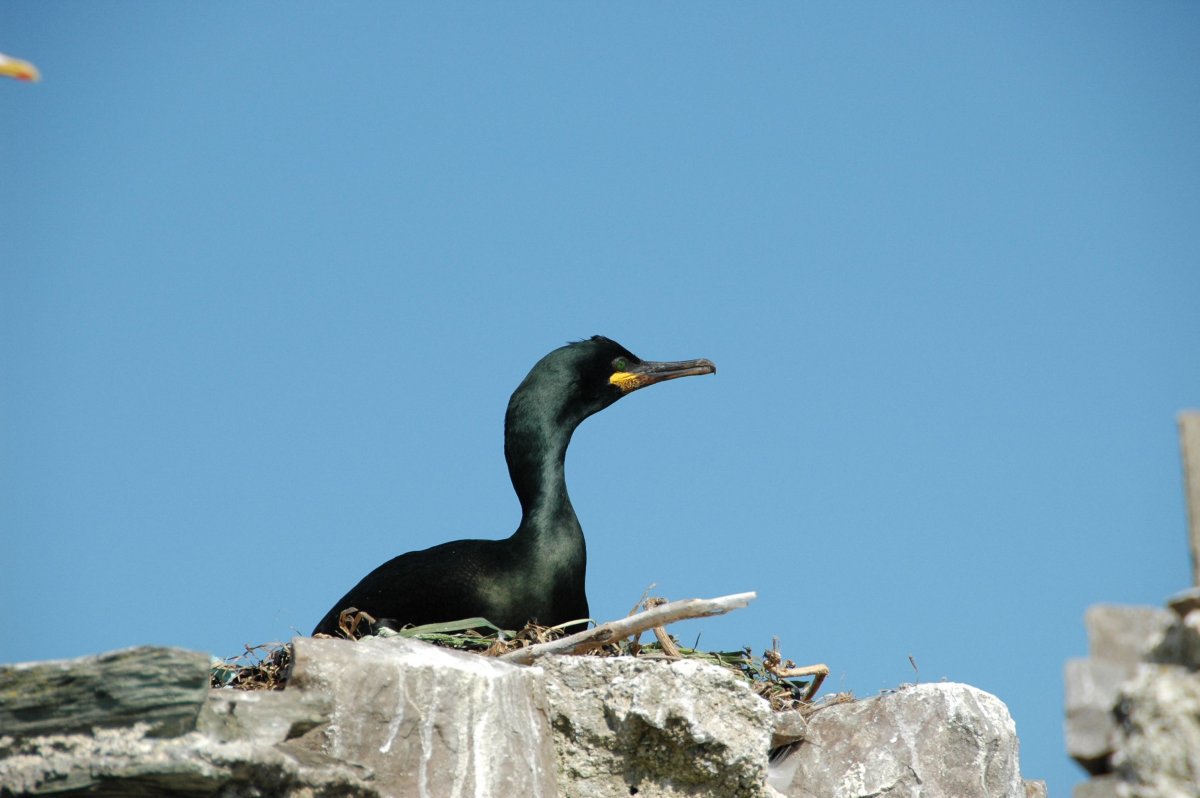
Cormorant hupped

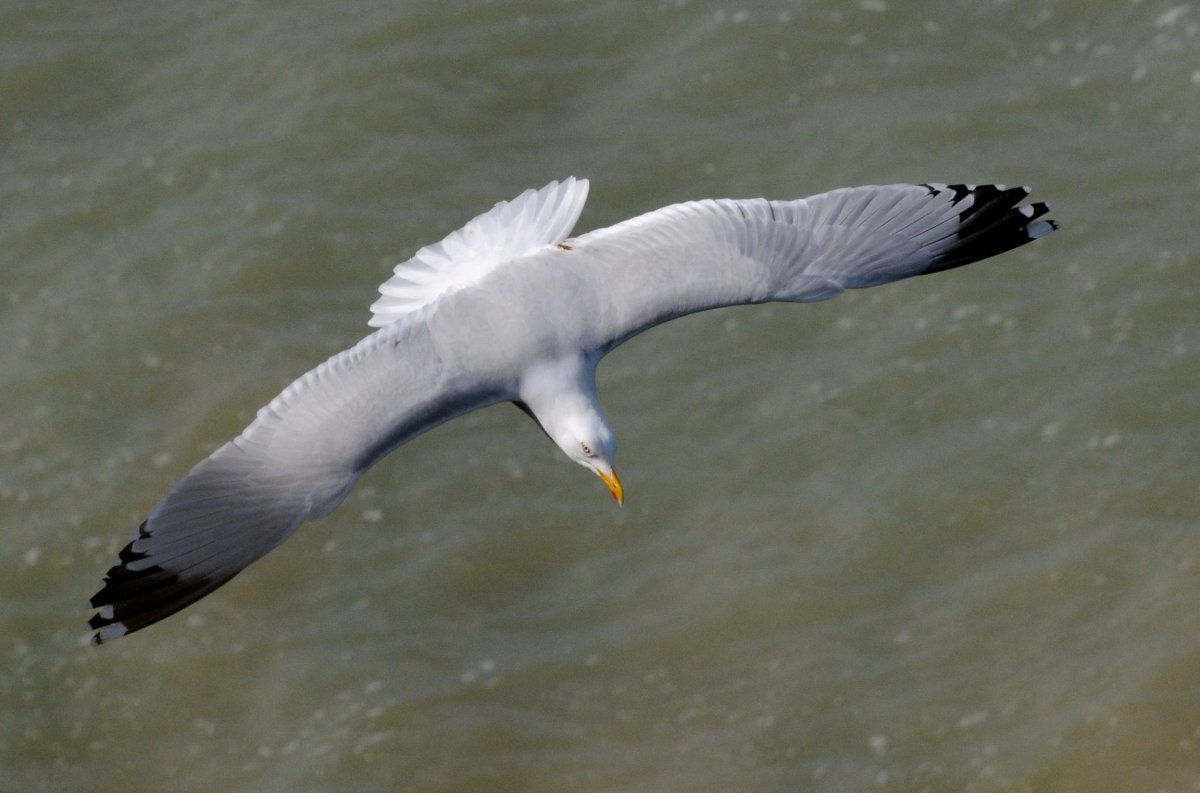
Brown sea Gull (photo Gérard Debout)
If the grand cormorant (photo) is often present there, it does not nest there or very rarely and in small numbers, the majority of the individuals observed coming from the Saint-Marcouf Islands where the main French colony has settled.
Another cormorant, the hupped cormoran (photo), infrequent, nests much more regularly

Sea sea Gull


Perigin falcon
If the nesting of seabirds is remarkable on the cliffs west of Vierville-sur-Mer, a multitude of marine species transit through the sandy beach, especially in late summer and autumn, when the post-nuptial migration of many species of seabirds takes place. Over a season, more than 100,000 birds are recorded in active migration from the coast.
Among them, we note the cravant bernache (photo) whose more than 5000 individuals can parade in more or less important troops on some days of October, as well as the fou de Bassan, a pelagic bird making important movements.

Croant bee

Migration of bernache

Beers in flight

The passage of wild geese on the coast of BessinRead the rewritten text
This reading version has been rewritten from the newspaper clipping. Connecting phrases and any reconstructed words are not a verbatim quotation.
The wild geese had begun to head south, with a delay noticed by Dominique Loir of the LPO. A major flight was observed on a Thursday over the German battery of Longues-sur-Mer. The following Saturday, several hundred birds flew over the Pointe de la Percée, while smaller groups passed here and there. The newspaper estimated that a large part of the passage took place offshore, at a rate of about ten geese for a glimpse from the coast.
On Sunday morning, cravant bernaches had stopped on the waters of the Port-en-Bessin basin. These small geese from the Arctic seemed unimpressed by the crowd of the market, which allowed them to be observed up close.
Dominique Loir, however, invited not to see in these observations the certain announcement of a great cold. Temperatures remained abnormally mild in Scandinavia as in Bessin. As long as the birds found food, they could extend their stay; other factors, including light, were also expected to lead them to migrate. According to this analysis, a sudden arrival of cold would cause a massive departure, while mildness would lead to a more staggered migration.
View the archive imageDownload the rewritten text
Original OCR text
The original OCR text is kept for comparison with the image. Its reading order and some words may be incorrect.
Migration of geese, autumn 2014

Parasitic labbe

Stern Pierre-Garin

Star caugek

Sterne dwarf
But talking about the seabirds present on the beach of Vierville is also dwelling on two species of seagulls and a seagull that do not nest here but are present there: the laughing gull well known to all and the melanocephalical gull, a little bigger, some of which, born in the Balkans, come to spend the bad season with us.

Adult laughing seagulls

Young laughing seagulls
As for the ash seagull (photo) it frequently uses the technique of releasing a shell several meters high so that it shatters to the ground, and then feeds on it.
Alain CHARTIER
Norman Ornithological Group
Photos Céline Chartier and Alain Chartier


Various larides on the beach of Vierville
