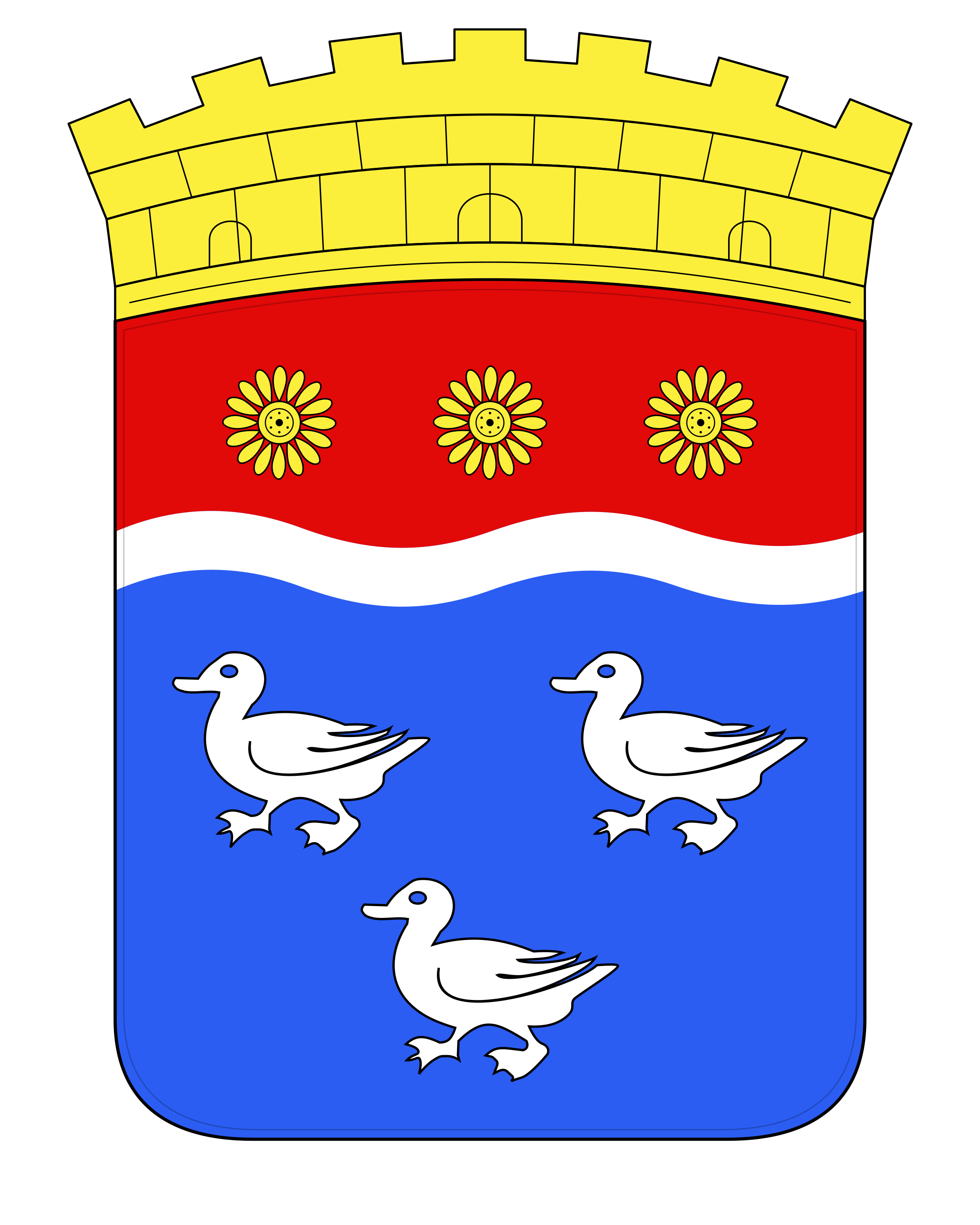
Souvenirs of the De Loÿs family
June 6 at Gruchy Castle
Excerpt from "Le Jour le Plus Fou" (by E.Coquart and P. Huet, at Albin Michel)

The castle of Gruchy, residence of the Loys family and in 1944, PC the company 9/726, which defended the Percée and Englesqueville

Captain Alfred Grundschloss,
Born on January 19, 1893,
Died in combat on June 6, 1944
He commanded the 9th company (9/726) which, from noon on June 6, blocked the Americans at the west exit of Vierville, until the morning of June 7.
"Buried in the grove, surrounded by futaies and masked by hedges, the castle of Gruchy is not even visible from the departmental 514 which touches the perimeter wall. The sea is very close. In fact, she is all around. The castle, we say here, rests on "a lump of earth". On one side, the cliff at eight hundred meters. On the other, the beach two kilometers away.
The house is big, huge. But Mrs. de Loÿs and her son Guy (16 years old) only have the dining room on the ground floor and two bedrooms upstairs. Everything else is occupied by German soldiers, about a hundred men (of company 9/726), whose presence singularly disturbs life at the castle. It's not funny every day, but Mrs. de Loÿs sticks to a rigorous line of conduct, transmitted to her son: no openly hostile attitude, no question of playing "to war", but no familiarity either. Staying cold and reserved, knowing how to keep your distance, never accept the slightest invitation. In short, be content with the bare minimum in its obligatory relations with the occupant.
Mme de Loÿs is a woman of will, order and composure-------She had made the difference; given the evolution of the war, the deprivations increasingly difficult to endure in the capital, it was better to take refuge in the countryside (with an elderly aunt).
For a few days, however, Mrs. de Loÿs has been wondering. On the coast, it's raining bombs like never before. It's a flood. So much so that a friend, Dr. Pinard, came to ask her if she wanted to welcome her old mother of over eighty years old and her lady-in-waiting. They live in Cricqueville-en-Bessin, near the Pointe du Hoc, an objective that has been beaten for several days by Allied aviation: "I can no longer ensure my mother's safety" said the toubib.
But at the castle of Gruchy too, the night of June 5 to 6 promises to be chaotic: "It's getting brutal", comments Mrs. de Loÿs.
And noisy. Between 4 and 5 a.m., the soldiers agitate like crazy people, scream orders, go down the stairs, run in all the rooms. Mrs. de Loÿs and her son go out on the terrace where they are soon joined by Captain Grünschloss, commanding the company stationed at the castle.
Unlike others, to this Meyer in particular, a fanatical officer, a Hitler, settled with close friends, at the Château des Isles (in Vierville, with the Ygouf family), Grünschloss is a good man. Professor of civil law, this Bavarian speaks French and is very correct. On May 25, when the old aunt had just died, her good manners impressed Mrs. de Loÿs herself.
"What can I do for you?" he asked him.
"I would be grateful if you could evacuate the stairs and vestibule from any German presence because I have no other way out to get the body out. I would like her to leave her house outside the presence of the occupant. I would also like that when it is time to take the coffin, your men are elsewhere, that it is not a show for them."
- "So it will be", promised Grünschloss, and he kept his word. But before that, the captain wanted to greet the mortal remains. An appointment was made. At the said time, the captain entered the room of the dead woman in a large ceremonial outfit, and before collecting, took care to remove his saber.
A well-behaved man. Even if today, time is running out...
"I'm sorry, but for security reasons, I'm forced to evacuate the house."
"But where do you intend to send us?" asks Mrs. de Loÿs.
"In the underground."
One of the underground. Passionate about architecture in the Viollet-le-Duc, the family ancestor had once embarked on some architectural fantasies that give the 17th century castle a slightly tarisco charm. In the same spirit, he had had vast undergrounds dug around the property, which had never been completed. To build a shelter, the Germans had chosen the closest one, which sank into the park and ended in the woods, on the other side of the road.... They had arranged the floor in a kind of rudimentary parquet, had supported the ceiling and brushed the walls with tar.
It's really pressing. The bombs fall all around the castle, explode in the park (probably the bombing by the Liberators at high altitude, who "aim" at the Percée, and who will kill a milker and her young son in the Louvières countryside). Mrs. de Loÿs and her son rush to the underground, but realize that they have simply forgotten the old lady and her governess on the first floor.
Guy turns around, first retrieves the governess. "She was shaking so much, he remembers, that she shook the stair railing... » He guides her to the underground. Then he retraces his steps, looking for Dr. Pinard's mother. There, things get complicated: the old lady stubbornly refuses to leave the room. She is deaf, deaf to the point that she hears nothing from the bombings. The electricity is cut off, it's still dark in the room. So that Mrs. Pinard can read on her lips, the young boy illuminates his face with a flashlight, and tries, with a minimum of courtesy, to explain the seriousness of the situation. Talks are dragging on, but bombs continue to fall. At the end of arguments, Guy de Loÿs takes the old lady "thin like a fetu" in his arms and goes down the stairs. She protests, complains about the cheeky manners of this very unkind young man. But as they reach the kitchen door, a tremendous explosion throws them both to the ground. This time, the grandmother understood, she screams, she storms: "The faster, the faster! My son placed me at your place to save me, not to make me die!»
Sounded by the breath of the explosion, Guy acts like a sleepwalker. He takes Mrs. Pinard back in his arms, runs to the underground.
This one is complete. In addition to the German soldiers who were ordered to stay on site, about forty civilians piled up in the narrow casing. Neighbors, farmers. There is a crying woman whose husband has just died under the bombs, a baby of just two weeks. Mrs. de Loÿs and Guy settle at the entrance, near the German command and the emergency station.
6 in the morning, in the basement of the castle of Gruchy. Mrs. de Loÿs gets closer to her son.
"Did you hear what the operator said?"
Guy shrugs his shoulders. Unlike his mother, he doesn't understand a word of German
"He said: large enemy fleet at eight miles at sea."
New telephone communication a few moments later: underground soldiers are ordered to move "from the passive defensive phase to the active defensive phase". They get up, take their weapons, slowly climb the stairs that lead them to the surface, apparently in no hurry to fight. Only the operator and the nurses remain in the shelter. Morale at half-mast, they openly display their pessimism: "War over. Deutschland kaputt", they lament to the castle of Gruchy.
Nurses and stretchers are called in turn and leave the underground, abandoning the first wounded who, in the meantime, have arrived. One of them is very seriously affected. It is stretched out on a stretcher, the cranial box literally decaloted. Both fascinated and horrified, the young Guy can't take his eyes off him. He sees, under the miraculously intact membrane, the brain that beats. The unfortunate suffers martyrdom, you must hold his hands permanently so that he does not touch his horrible wound, which could cause irreparable damage. Mrs. de Loÿs finds the parade: with the help of a rope, she ties the injured man on his stretcher.
(Day of June 6)
The hours go by, endless. The noise is always so infernal, the earth trembles under the explosions, the underground vibrates, sometimes filled with a terrifying shock wave. Civilians get used to it, guess that the battle started on the beach, under the cliffs. They also know the difference between planes and cannons, between bombs and shells.
A slight lund occurs around 11 a.m. Mrs. de Loÿs turns to her son: "There must be milk, bread or something else at home. Manage to find something to feed all these good people."
Guy goes out into the open air: everywhere craters of bombs, shell holes, mowed, burned trees. He expects to find the ruined castle, but he was miraculously spared. Only the facade was riddled with bullets and all the windows were sprayed. Later, the owners will learn that a shell has passed under the house and that it has buried itself without having exploded.
The young boy goes around the house, and comes face to face with Captain Grünschloss. Stunned, the officer asks him what he is doing there. Does he want to be killed?
"My mother sends me to get water, milk and supplies for the people of the underground."
"Take everything that can be useful in our reserve."
He accompanies Guy de Loÿs in the outbuildings where all food rations are stored. They then go to the kitchen to get some bread.
"Take whatever you want", says Captain Grünschloss again. Then he moves away. The de Loÿs were not to see him alive again. Captain Grünschloss was killed eight hundred meters from the castle. He had gathered his men to constitute a defensive point on the road to Vierville. (they blocked the advance of the Americans of the 5th Ranger and the CieC/116 to the tip of the Hoc all day).
How long? In the underground of Gruchy, the hours, the minutes, the seconds flow drop by drop. The sounds of the battle infiltrate, meander along the walls oozing with moisture, resonate or suffocate in jerks. The buried of the castle are waiting.
During the afternoon, other injured Wehrmacht infantrymen went down the stairs leading to the basement. But there are no more nurses to take care of them. There are about twenty of them, some of them seriously affected.
Mrs. de Loÿs does her best, multiplies the summary dressings.